The Physician Difference: Why Seeing an Actual MD Changes Everything About Your Testosterone Care

Updated: May 26

The Problem
Something Is Off — And a Quick Clinic Visit Hasn't Fixed It
It starts subtly. You're dragging by mid-afternoon even when you've slept a full night. The motivation to push through a workout has gone quiet. You're short on patience in ways that feel out of character. Your body is changing in ways you can't explain with diet or age alone.(These are some of the most common signs of low testosterone.)
So you do what makes sense: you look up a men's health clinic, schedule an appointment, and go in for labs. Someone reviews a number with you. You leave with a testosterone prescription.
Months later, you don't feel right. Maybe better in one area, worse in another. Maybe flat — like the treatment is doing something, but not the right thing. And when you try to have a deeper conversation about what's going on in your body, you get a protocol adjustment, not an explanation.
This is the most common experience men have at testosterone franchise clinics. And it happens because the person managing your care was never trained to see the full picture.
The Research
Testosterone Therapy Is Physician-Level Medicine
Low testosterone — clinically defined as hypogonadism — is not a simple deficiency to correct. It exists within a web of hormonal, metabolic, and cardiovascular variables that interact constantly. Testosterone levels are regulated by the hypothalamic-pituitary-gonadal (HPG) axis, influenced by sleep, insulin sensitivity, thyroid function, stress hormones, and body composition. Treating one node of that system in isolation is not medicine. It is guesswork.
"The clinical diagnosis of hypogonadism requires both biochemical confirmation and the presence of signs and symptoms — not lab values alone. Individualizing therapy based on the full clinical picture is essential and cannot be reduced to a standardized protocol."
— Bhasin S, et al. Testosterone Therapy in Men with Hypogonadism: An Endocrine Society Clinical Practice Guideline. J Clin Endocrinol Metab. 2018;103(5):1715–1744.
What this means in practice: a patient with a testosterone level of 295 ng/dL and crushing fatigue may need treatment. A patient with the same number but primary hypothyroidism may need a thyroid prescription first. A patient with the same number and obstructive sleep apnea may recover entirely from CPAP therapy. These distinctions require pattern recognition — the kind that comes from years of training and clinical exposure, not a two-year mid-level program.
"Symptom overlap between hypogonadism and other medical conditions — including depression, hypothyroidism, and metabolic syndrome — necessitates physician-level differential diagnosis before initiating testosterone therapy."
— Mulligan T, et al. Prevalence of hypogonadism in males aged at least 45 years: the HIM study. Int J Clin Pract. 2006;60(7):762–769.
The Solution
A Physician Who Treats You, Not Your Protocol
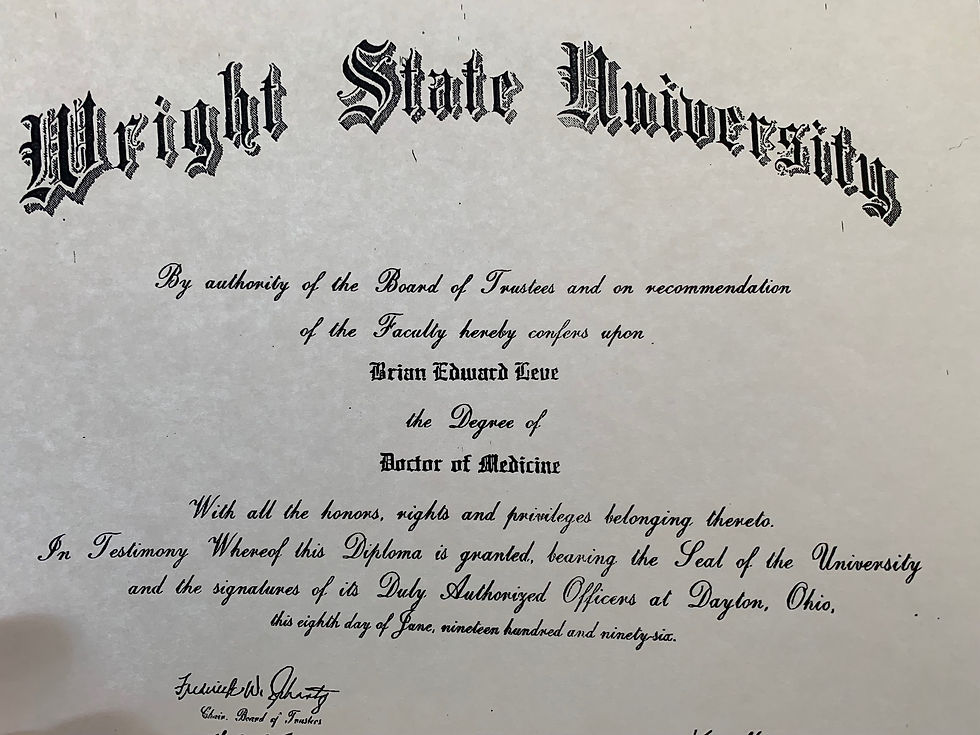
German Village Men's Clinic was built on a single premise: men deserve physician-level care for physician-level conditions. Dr. Brian Leve is a board-certified MD whose clinical training and decades of practice have produced the diagnostic depth that franchise clinics cannot replicate.
At most men's health clinics, the physician is in the background — signing off on protocols set by mid-level staff, available only for escalations. At German Village Men's Clinic, Dr. Leve is your primary provider from your first appointment through your ongoing care. He evaluates your labs. He designs your treatment plan. He makes the adjustments when your body responds in unexpected ways — because hormones frequently do.
Your consultation begins with a comprehensive clinical interview — not a symptom checklist handed to a PA.
Your labs are ordered based on your individual presentation, not a standard panel that applies to every patient.
Your treatment is designed around your full biology — hormonal, metabolic, cardiovascular — not just a testosterone number.
Your follow-up includes a physician who recognizes when something has changed and knows why.
Taking Action
Start With a Complete Diagnostic Picture
Before any treatment begins, Dr. Leve invests the time to understand your full clinical picture. Your testosterone level is one data point. It does not tell the whole story. The evaluation at German Village Men's Clinic includes a comprehensive hormonal and metabolic panel — not the abbreviated version sent to a national lab — reviewed personally by Dr. Leve before a single treatment decision is made.
If you've been dismissed by another clinic, or if you're on TRT that isn't working the way you hoped, this evaluation is where the real answers begin.
The Outcome
Restored Vitality — and the Confidence That Your Care Is Built on Real Medicine
Men who receive physician-direct care at German Village Men's Clinic don't just report improved testosterone levels. They report clarity — physical and mental. Energy that sustains through the afternoon. Motivation that shows up consistently at the gym and at home. A body that finally responds to the effort they're putting in.
But what they describe most often is something harder to measure: confidence. Confidence that the person managing their hormonal health understands what's happening inside them — not just what the number says, but what the number means in the context of their entire biology.
When a physician manages your testosterone, you are not following a protocol. You are receiving care designed specifically for you — by someone whose training and judgment are capable of that distinction.
Schedule your consultation with Dr. Brian Leve at German Village Men's Clinic today. Real testosterone care starts with a real physician.


Comments